Hardwood Floors in 98682: Installation, Refinishing and Staining in East Vancouver
October 26, 2026 · All About Floors NW
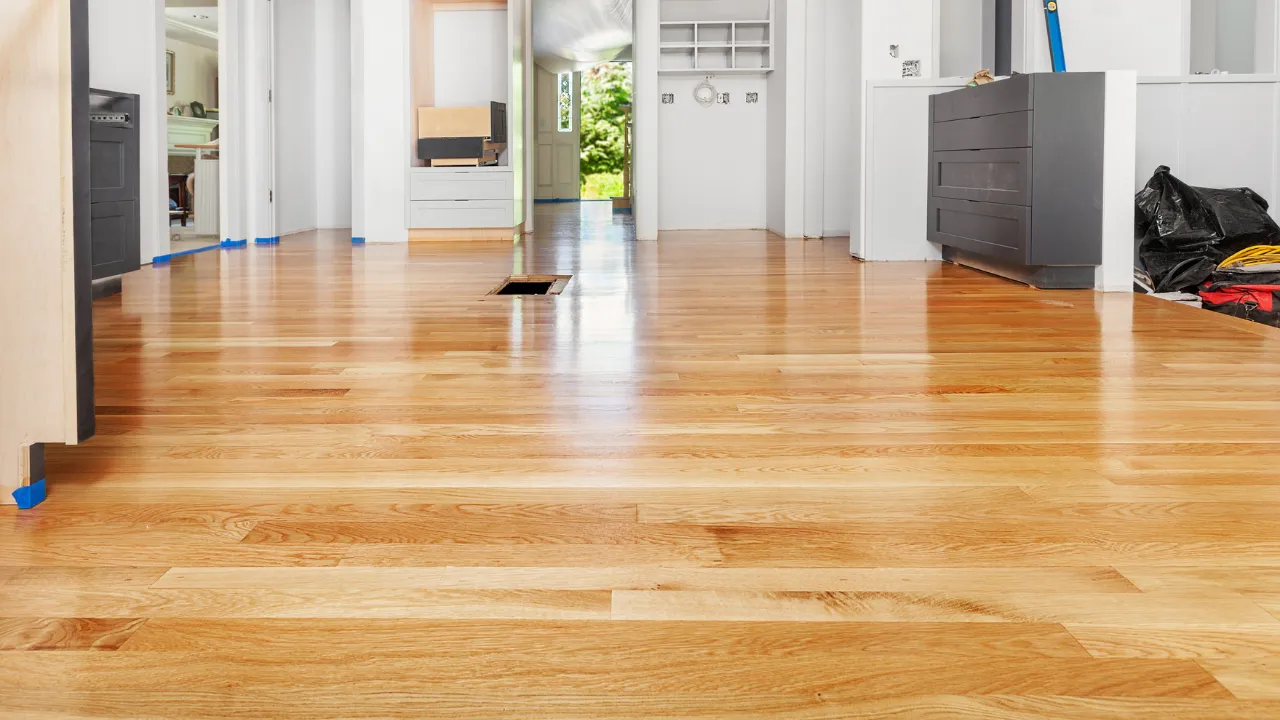
Our showroom sits at 6700 NE 152nd Ave, in the middle of the 98682 ZIP code. A lot of the hardwood work we do is within a few miles of it, in the subdivisions around Orchards, Fourth Plain, NE 162nd Ave and the streets running north toward Sifton and Proebstel.
The homes here have a lot in common, and so do the hardwood questions their owners ask us. Most of the housing in 98682 went up from the 1980s through the 2000s, with newer subdivisions still filling in. Many were built with carpet in the living areas and a small patch of oak in the entry or kitchen. Twenty or thirty years later, the oak is scratched and orange, the carpet is worn, and people want one floor that runs through the house.
This guide covers the three jobs we’re asked about most in 98682: installing new hardwood, refinishing the hardwood that’s already there, and staining it to a new color.
First, find out what you have
Before planning anything, figure out which kind of floor is in the house, because it decides what’s possible.
- Site-finished solid oak. Common in entries, kitchens and dining rooms in 1980s and 1990s homes. The boards have tight, flat seams with no grooves between them. This floor can be sanded and refinished several times.
- Prefinished solid hardwood. Common from the late 1990s on. You’ll see small V-shaped bevels along the edges of every board. It can be refinished, but the bevels hold old finish and dirt.
- Engineered hardwood. A layer of real wood on a plywood core. Whether it can be refinished depends on how thick that top layer is.
- Laminate or LVP that looks like wood. More common in newer homes and flips than most owners realize. Neither can be sanded. If the surface is worn, it gets replaced.
Pull a floor register and look at the edge of the board, or check a spot where the floor meets the stairs. If you can’t tell, that’s one of the first things we check at an in-home estimate.
Installing new hardwood in a 98682 home
Replacing carpet in the living areas
The most common hardwood installation we do near the showroom is pulling carpet out of the living room, dining room and hallway and running hardwood through. A few things come up in nearly every one of these homes:
- The subfloor wasn’t built for hardwood. Builders put down subfloor with carpet in mind. Before hardwood goes in, we check it for flatness, fix squeaks by screwing it down to the joists, and look for soft spots near sliding doors and bathrooms.
- Floor height changes at the edges. Carpet and pad are thicker than you’d guess, so new hardwood often sits lower than the old carpet at the tile in the entry or kitchen. We plan transitions before the floor is ordered.
- Stairs in the middle. In two-story homes the stairs usually sit between the rooms getting hardwood. Our hardwood stairs guide covers replacing carpeted stairs with hardwood treads.
Matching and extending existing oak
When a house already has oak in the entry or kitchen, the cleanest result is usually to extend it rather than butt a new floor up against the old one. We install new boards in the same species, width and thickness, weave them into the existing floor where the rooms meet so there’s no straight seam, then sand old and new together and finish everything in one color.
This works best with site-finished solid oak, which is what most 1980s and 1990s homes in 98682 have. Prefinished floors with beveled edges are harder to blend, and sometimes a well-placed threshold looks better than a forced match. We’ll tell you which one your floor calls for.
Solid or engineered?
Both go into east Vancouver homes all the time. The foundation usually decides it.
- Crawlspace homes, which describes most of the housing here, can take solid hardwood nailed to the subfloor, as long as the crawlspace has a ground vapor barrier, decent ventilation and no standing water. A wet crawlspace is the most common reason we see hardwood cup in Clark County.
- Slab foundations and basements call for engineered hardwood, glued down or floated over a moisture barrier.
- Wide planks are more stable as engineered, whatever the foundation. Our wide plank flooring guide explains why.
The full comparison is in our guide to engineered vs. solid hardwood, and our hardwood installation guide walks through the install itself. You can see the species and brands we carry on our hardwood flooring page.
Refinishing the hardwood you already have
A lot of the oak in 98682 has never been refinished. It has twenty or thirty years of grit ground into the finish, gray traffic lanes from the front door to the kitchen, and a deep amber color from the original oil-based finish. Under all that, the wood is usually fine.
Refinishing means sanding the floor down to bare wood, which removes the old finish, the scratches and the color, then applying stain if you want it and several coats of new finish. Our hardwood floor refinishing page covers the service, and our refinishing guide covers the process step by step.
Site-finished solid oak refinishes beautifully and can usually be sanded several more times over the life of the house.
Prefinished solid hardwood refinishes well, but the small bevels along each board edge sit below the sanded surface and keep a thin line of old finish. On most floors this is a minor detail. If it matters to you, the floor can be sanded deeper to reduce the bevels, which uses up more of the wood.
Engineered hardwood can be refinished when the top layer of wood is thick enough, generally around 3 mm or more. Thin-veneer products from the 2000s often can’t be sanded at all. We measure before quoting.
When the floor only looks dull, not scratched through, a screen and recoat may be enough. That means lightly abrading the existing finish and adding a fresh coat, without sanding to bare wood. It costs much less and takes a day. Our post on refinishing vs. replacing hardwood helps you decide which one your floor needs, and hardwood floor restoration covers floors that need more than a refinish.
Staining: getting away from honey oak
The single most common request we hear in 98682 is some version of “make it stop looking orange.” That amber tone comes from two things: red oak’s natural warmth, and decades-old oil-based finish that has yellowed. Sanding removes both, which gives you a clean starting point.
From bare oak, the usual choices are:
- Natural with a water-based finish. Water-based finishes stay much clearer than the original oil-based ones, so the oak looks lighter and less yellow without any stain at all.
- Neutral browns. The most popular direction right now. Mid-tone browns hide everyday dust and dog hair better than very light or very dark floors.
- Dark stains. Dramatic, but they show dust, paw prints and scratches more than anything else.
- Grays and whitewashes. Possible, but red oak has a pink undertone that fights pure gray. On red oak we usually steer toward a warm neutral. White oak takes gray much more evenly.
We always put stain samples down on your own sanded floor, in the light of the room, before choosing. A color that looks right on a sample board in the showroom can look completely different on 25-year-old red oak. Our hardwood floor staining guide explains the process, and warm stain colors and hardwood sheen help with the two decisions people struggle with most.
What to expect on the job
Timeline. Installing hardwood through a typical main floor takes about three to five working days, plus acclimation time for the wood beforehand. Refinishing a main floor takes about three to five days from sanding through the final coat, and stain adds drying time between steps.
Living at home. Most families stay in the house. We work in sections where we can and keep the main path open as long as possible. After the final coat, socks are usually fine at about 24 hours, pets should stay off for 48 to 72 hours, and rugs and heavy furniture go back after 5 to 7 days.
Dust. Modern sanding equipment with vacuum collection cuts the dust down a lot, but it doesn’t eliminate it. Plan to cover anything you care about in nearby rooms.
Cost. New hardwood installed in our area typically runs roughly $8 to $18 per square foot depending on species, width and finish. Refinishing existing hardwood usually costs well under half of replacing it. See our flooring cost guide for the rest of the ranges, and our financing page if you want to spread the payments out.
Keeping it looking right in an east Vancouver winter
Clark County winters are damp outdoors and dry indoors once the furnace runs. Wood shrinks as the indoor air dries out, so thin gaps between boards in January are normal and close again by late spring. Keeping indoor humidity roughly between 35 and 55 percent all year keeps the movement small. A humidifier on the furnace or a good room unit is the easiest fix.
The other local enemy is grit. Wet weather tracks fine sand and gravel in from the street, and that’s what scratches finish fastest. Put a good mat at every door and sweep or dust-mop often. Our hardwood cleaning guide covers the rest.
Hardwood from your neighborhood showroom
All About Floors NW has been flooring Vancouver homes since 1999, and our showroom is right here in 98682. That makes it easy to borrow samples, see full boards before you decide, and have us out for an estimate on short notice.
- Showroom at 6700 NE 152nd Ave #140, Vancouver, WA 98682, Monday through Friday, 9 to 6
- Free in-home estimates with stain and species samples brought to your house
- Installation, refinishing and staining from one team, so new and existing wood are finished together
- A written workmanship warranty on every installation
We also serve the rest of the city through our Vancouver hardwood flooring and Vancouver hardwood refinishing pages, and nearby Camas and Brush Prairie.
Book a free in-home estimate, or text (360) 525-2962 with a few photos of your floors. Tell us whether you’re adding hardwood, refinishing what’s there, or both.
Related reading
Frequently asked questions
- Do you install and refinish hardwood floors in 98682?
- Yes. Our showroom is at 6700 NE 152nd Ave #140, inside the 98682 ZIP code, so most east Vancouver and Orchards homes are a short drive away. We install solid and engineered hardwood, sand and refinish existing hardwood, and stain floors to a new color. In-home estimates are free.
- Can new hardwood be matched to the oak already in my house?
- Usually, if the existing floor is solid or thick-veneer engineered oak. We install new boards of the same species, width and thickness, weave them into the existing floor where the rooms meet, then sand the whole area together and finish it in one color. The old and new wood then read as one floor. Prefinished floors with beveled edges are harder to match, and we will tell you at the estimate if a clean transition is the better answer.
- Can honey oak floors be changed to a more modern color?
- Yes. Sanding removes the old amber finish, and the bare oak can then take a natural water-based finish, a neutral brown or a darker stain. Red oak, which is common in east Vancouver homes, has a pink undertone that fights pure gray stains, so we test stain samples on your own floor before choosing.
- How long does refinishing take, and can we stay home?
- A typical main floor takes three to five days from sanding through the final coat. Most families stay in the house and keep off the floors being worked on. You can usually walk on the floor in socks after about 24 hours, keep pets off for 48 to 72 hours, and wait 5 to 7 days before putting rugs and heavy furniture back.
- Can my prefinished hardwood be refinished?
- Solid prefinished hardwood can be sanded and refinished, though the small bevels along the board edges may stay visible unless the floor is sanded deeper. Engineered hardwood can be refinished only if the top layer of real wood is thick enough, generally around 3 mm or more. We check by pulling a floor vent or looking at a cut edge during the estimate.
- Is solid hardwood a good idea over a crawlspace in east Vancouver?
- It can be, as long as the crawlspace has a vapor barrier on the ground, good ventilation and no standing water. Moisture coming up from a damp crawlspace is the most common reason hardwood cups in Clark County. On slab foundations, engineered hardwood is the better choice.