Wide Plank Flooring in Vancouver, WA: Hardwood, Engineered, LVP and Laminate Compared
October 26, 2026 · All About Floors NW
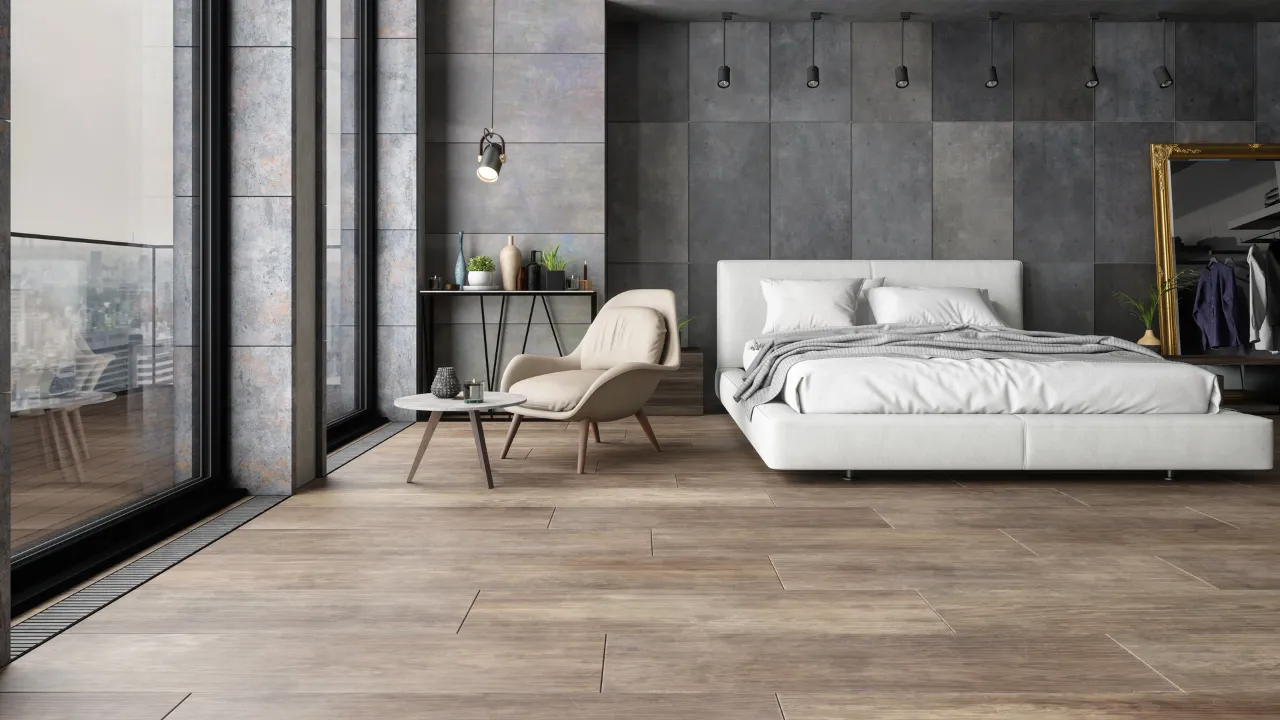
Wide plank flooring has gone from a high-end specialty to what most people ask for when they walk into our Vancouver showroom. It’s easy to see why. Fewer seams make a room look calmer and more open, and the full grain of each board shows instead of being chopped up every few inches.
What people don’t always realize is that “wide plank” means very different things depending on the material. A 9-inch solid oak board, a 9-inch engineered oak board and a 9-inch LVP plank behave completely differently in a Clark County house. This guide explains the options, what our climate does to wide boards, and what it takes to install them so they stay flat.
What counts as wide plank
There’s no official cutoff, but in the flooring trade:
| Width | What it’s usually called |
|---|---|
| 2¼ inches | Traditional strip. The oak in most homes built before 1990 |
| 3 to 5 inches | Plank |
| 5 to 7 inches | Wide plank |
| 7 to 9 inches | The most popular range right now |
| 10 inches and up | Extra wide. Mostly premium engineered oak |
Length matters as much as width. A wide board that’s only 3 or 4 feet long puts end seams everywhere and loses most of the calm look you’re paying for. Ask about the average and longest board length, not just the width. Lines with boards 6 feet and longer look the most like a high-end floor.
Your four wide plank options
Solid wide plank hardwood
Solid boards milled from a single piece of wood. Beautiful, can be sanded many times, and the most traditional choice.
The problem is movement. Wood shrinks and swells by a share of its width as humidity changes, so a 9-inch board moves about four times as much as a 2¼-inch strip. In a Pacific Northwest house, where it’s damp outdoors and the furnace dries the air for half the year, solid wide planks tend to gap in winter and can cup if moisture comes up from a crawlspace.
Solid wide plank can work over a dry, well-ventilated crawlspace with a ground vapor barrier, and a household that keeps indoor humidity steady. It isn’t the right choice over a slab or in a basement.
Engineered wide plank hardwood
A real hardwood top layer bonded to a cross-layered plywood core. The layers run in different directions, so they hold each other in place, which makes engineered boards far more stable than solid at the same width. That’s why most wide plank hardwood sold today is engineered, and why it’s what we recommend for most wide plank projects in Clark County.
It can go almost anywhere solid can, plus over concrete slabs and in many basements. Brands like DuChateau, known for its wide European oak, and Hallmark offer wide engineered lines, and you can see full boards on our hardwood flooring page and in the showroom.
The thing to check is the wear layer, the thickness of real wood on top. A wear layer around 3 mm or more can be sanded and refinished; thinner layers can only be recoated. Our engineered hardwood buyer’s guide covers wear layers and cores in detail, and engineered vs. solid hardwood compares the two head to head.
Wide plank luxury vinyl plank (LVP)
Most LVP sold today is already 7 inches wide or more, and 9-inch planks are common. Because the core is vinyl or stone-plastic composite rather than wood, it doesn’t shrink or swell with humidity at all, and it’s waterproof.
That makes wide plank LVP the practical choice for kitchens, laundry rooms, basements, rentals and homes with large dogs. The best current lines have realistic texture registered to the wood grain and varied plank patterns so you don’t see the same board repeating every few feet. Our luxury vinyl plank page shows the brands we carry, including COREtec, Mohawk, Shaw and Quick-Step.
Wide plank laminate
Laminate also comes in 7-inch and wider planks, often in long lengths. It has a harder, more scratch-resistant surface than LVP and a more solid feel underfoot, and it usually costs a little less. The trade-off is the wood-fiber core, which doesn’t like standing water. Newer water-resistant lines are much better here. See our comparison of waterproof laminate vs. LVP and our laminate flooring page.
Quick comparison
| Solid hardwood | Engineered hardwood | LVP | Laminate | |
|---|---|---|---|---|
| Typical wide widths | 5 to 8 in | 6 to 10+ in | 7 to 9 in | 7 to 9 in |
| Seasonal movement | Most | Low | None | Low |
| Water | Not resistant | Not resistant | Waterproof | Water-resistant lines available |
| Over concrete slab | No | Yes | Yes | Yes |
| Refinish later | Yes, several times | If wear layer is thick enough | No | No |
| Feel underfoot | Solid, warm | Solid, warm | Softer, quieter | Firm |
What our climate does to wide boards
Vancouver’s weather is damp nine months of the year, but inside a heated house the air gets dry. During cold, dry spells, especially when east winds blow out of the Columbia River Gorge, indoor humidity in a heated home can fall to around 30 percent or lower. Wood gives up moisture and shrinks, and on a wide floor each seam opens a little more than it would on narrow strip.
Then summer, or a damp crawlspace, pushes moisture back in. If the bottom of a board takes on more moisture than the top, the edges rise and the board cups. Wide boards show cupping much more than narrow ones.
Three things keep a wide hardwood floor flat:
- Steady indoor humidity. Aim for roughly 35 to 55 percent year-round. A humidifier on the furnace is the simplest fix for winter dryness.
- A dry crawlspace. A ground vapor barrier, working vents and no standing water. We look at the crawlspace before recommending solid hardwood.
- Acclimation. Hardwood should sit in the house at normal living conditions before installation, and the installer should check the moisture content of both the wood and the subfloor.
LVP doesn’t care about any of this, which is a big part of its appeal. Laminate is far less sensitive to it than hardwood.
Installation requirements are stricter for wide planks
Wide boards are stiffer and span farther across the subfloor. That changes the install in a few ways:
- The subfloor has to be flatter. A wide board won’t bend down into a dip. It bridges it, and you get a hollow spot that flexes underfoot. Manufacturers commonly allow only about 3/16 inch of variation over 10 feet, and some are stricter. Expect leveling to be part of the quote in older homes.
- Solid wide planks are usually nailed and glued. Industry installation guidelines generally call for adding adhesive to the nailing on solid boards wider than about 5 inches, to keep them from cupping and moving.
- Engineered wide planks can be nailed, glued down or floated, depending on the product and the subfloor. Over concrete they are glued or floated over a moisture barrier.
- End seams need to be staggered well. Good layout keeps end joints spread out so you don’t get stair-step patterns or seams lining up across the room.
- Direction is a bigger decision. Wide boards emphasize whichever way they run. Running them along the longest wall makes a room read longer, and toward the main window makes seams less visible. Over a wood subfloor, hardwood should ideally run across the joists.
Our hardwood installation guide and LVP installation guide walk through each install in more detail.
Choosing the look
- Grade. Wide boards show more of each board’s grain, so the grade changes the whole room. Clear or select grades look calm and modern; character grades with knots and color variation look rustic.
- Color. Warm mid-tones and natural white oak are the most requested in Vancouver right now. See our guide to warm hardwood stain colors.
- Sheen. Matte and satin finishes hide scratches and dust far better than gloss, which matters more on a wide, open floor. Our sheen guide compares them.
- Edges. Square edges look like a site-finished floor. Micro-bevels on prefinished boards define each plank and hide slight height differences.
- Pattern. If you’re also considering herringbone or chevron for an entry or dining room, see wide plank and herringbone layouts.
What wide plank flooring costs in Vancouver
Rough installed ranges we see in our area, before prep such as tear-out and leveling:
- Wide plank laminate: roughly $4 to $9 per square foot
- Wide plank LVP: roughly $6 to $13 per square foot
- Wide plank engineered hardwood: in the upper part of the roughly $8 to $18 per square foot range for hardwood, and more for extra-wide premium oak
- Solid wide plank hardwood: similar to or above engineered, plus the cost of glue-assist installation
Wider hardwood costs more because it comes from larger, clearer logs and has more waste in milling. With LVP and laminate, wide planks are now standard and cost about the same as narrower ones. Our flooring cost guide has the full breakdown, and financing is available for qualified buyers.
Seeing wide plank in your own house
Board width is hard to judge from a small sample chip. Come see full-size boards in our showroom at 6700 NE 152nd Ave #140, Monday through Friday, 9 to 6, or book a free in-home estimate and we’ll bring several boards to lay out in your room, in your light, running the direction you’re considering.
All About Floors NW has been installing floors in Vancouver and Clark County since 1999. We’ll check your subfloor and crawlspace, tell you honestly whether solid, engineered, LVP or laminate fits your house, and back the installation with a written workmanship warranty. Find your city on our service areas page, including hardwood flooring in Vancouver, Camas and Ridgefield, or LVP in Vancouver.
Prefer to text? Send (360) 525-2962 a photo of the room and what you’re thinking about.
Related reading
Frequently asked questions
- How wide is wide plank flooring?
- There is no official cutoff, but in the flooring trade anything over about 5 inches is usually called wide plank. Most of what people ask for today is 7 to 9 inches wide, and premium engineered oak goes to 10 inches or more. Traditional strip hardwood is 2¼ inches.
- Is wide plank hardwood a good idea in the Pacific Northwest?
- Yes, if it is engineered. Every board shrinks and swells by a share of its width as indoor humidity changes, so a 9-inch board moves about four times as much as a 2¼-inch strip. Our damp winters and dry, heated indoor air make that movement visible in solid wide planks. Engineered hardwood's cross-layered core keeps wide boards much more stable.
- Do wide plank floors gap in the winter?
- Solid wide plank floors usually show seasonal gaps in winter, when the furnace dries the indoor air. Engineered wide plank shows much less. Keeping indoor humidity between about 35 and 55 percent all year is the best way to limit gaps, and a humidifier on the furnace is the easiest way to do it.
- Is wide plank LVP as good as wide plank hardwood?
- It is a different floor for a different job. Wide plank LVP is waterproof, more scratch- and dent-tolerant, and doesn't move with humidity, which makes it the better choice for kitchens, basements, rentals and homes with big dogs. Hardwood feels and sounds more solid, can be refinished, and adds more resale value. Many homes use both.
- Does wide plank flooring cost more?
- Usually, yes. Wider hardwood boards need larger, clearer logs and more careful milling, so wide plank engineered hardwood tends to fall in the upper part of the roughly $8 to $18 per square foot installed range we see in Vancouver. Wide plank LVP and laminate cost about the same as their standard widths, because most current lines are already 7 inches or wider.
- Does wide plank flooring work in small rooms?
- It can. Wide boards mean fewer seams, which makes a floor look calmer, and that often helps a small room feel bigger. The thing to avoid is a very wide, very bold-grained board in a tiny room, where only a few boards fit across and every knot stands out.